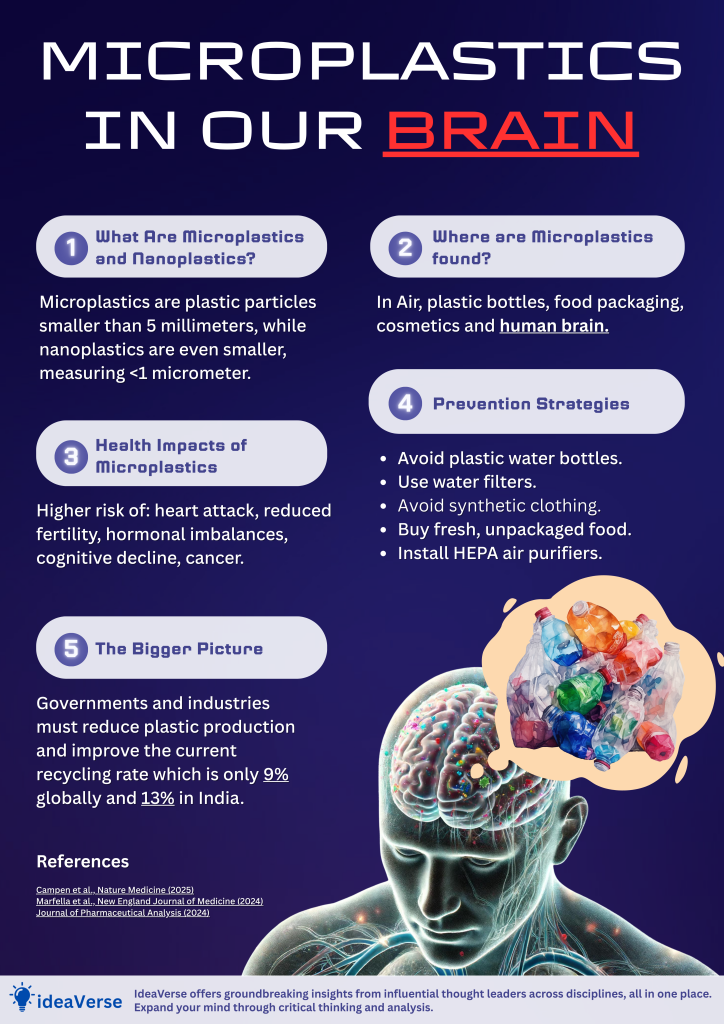


- Research suggests microplastics and nanoplastics are pervasive, found in air, water, food, and even human brains, potentially linked to health issues like dementia and heart disease.
- It seems likely that reducing exposure through avoiding plastic packaging and using filters can help, but the evidence on health impacts is still emerging.
- The evidence leans toward antioxidants and lifestyle changes like fasting and exercise potentially mitigating effects, though direct benefits are not fully proven.
Table of Contents
Introduction
In a world where plastic is ubiquitous, from the packaging of our food to the fibers in our clothing, it’s no surprise that microplastics and nanoplastics have become a growing concern. These tiny particles, often smaller than a grain of salt, are now found in the most unexpected places: our air, water, soil, and even our own bodies. While the full extent of their health impacts is still being researched, early studies suggest that microplastics may be linked to a range of health issues, from cognitive decline to heart disease.
What Are Microplastics and Nanoplastics?
Microplastics are plastic particles smaller than 5 millimeters, while nanoplastics are even smaller, measuring less than 1 micrometer. They can originate from the breakdown of larger plastic items or be intentionally manufactured for use in products like cosmetics and clothing. These particles are now ubiquitous in the environment, found in oceans, soil, air, and even in human tissues, as confirmed by the studies.
Sources of Microplastic Exposure
- Air: Inhaled from synthetic clothing and urban pollution, with studies showing significant indoor and outdoor concentrations [Forbes, 2024].
- Water: Bottled water contains up to 240,000 particles per liter, with 90% nanoplastics [PBS News, 2024].
- Food: Found in fruits (e.g., apples, 195,500 particles/g, vegetables, and packaged foods, often from plastic packaging [ScienceDirect, 2020].
- Packaging: Plastic-lined paper cups and tea bags release microplastics when heated [Springer Nature, 2025].
- Personal Care: Some skin creams contain microplastics, e.g., 1.48 million particles/50ml [Suntribe, 2023], though EU bans are reducing this.
Health Impacts of Microplastics
- Brain Health: A study by Campen et al. (Nature Medicine, 2025) found microplastics in human brains, with dementia patients having up to 10 times higher levels, suggesting a possible link to cognitive decline.
- Heart Health: Marfella et al. (NEJM, 2024) found microplastics in artery plaque, with a 4.5x higher risk of heart attack, stroke, or death, highlighting cardiovascular concerns.
- Reproductive Health: Linked to reduced fertility, with chemicals like BPA and phthalates causing hormonal imbalances [NLM, 2023].
- Toxic Chemicals: Plastics contain over 3,200 hazardous chemicals, including endocrine disruptors linked to cancer and developmental issues [NLM, 2023].
Prevention Strategies
- Avoid plastic water bottles; use glass or stainless steel or a bottle like Hydro Flask.
- Use water filters (e.g., Brita, ZeroWater) to remove microplastics.
- Choose natural fiber clothing (cotton, wool) over synthetics.
- Buy fresh, unpackaged produce from local markets.
- Install HEPA air purifiers to reduce indoor air pollution.
Protection and Healing
- Antioxidants: Foods rich in anthocyanins (berries, nuts, dark greens) may reduce oxidative stress, as suggested by [Science Direct, 2025]. Consider supplements like curcumin or NAC, but consult a healthcare provider.
- Autophagy: Intermittent fasting (12-16 hours weekly) and exercise (30 minutes daily) may trigger cellular repair, though direct evidence for microplastic detoxification is limited [NLM, 2014].
The Bigger Picture
While individuals can take steps, the issue requires broader action. Governments and industries must reduce plastic production, improve the current recycling rate which is only 9% globally and 13% in India, and develop green alternatives. More research is needed for standardized exposure measurement, as current methods vary. Economic impacts include healthcare costs from plastic-related diseases, urging systemic change.
References
Action Items
- Switch to Reusable Containers: Replace plastic water bottles with stainless steel (e.g., Hydro Flask).
- Eat More Antioxidants: Add blueberries to your morning yogurt for anthocyanins.
- Practice Intermittent Fasting: Try fasting 12-16 hours, like skipping dinner or eating early at night.
- Exercise Regularly: Aim for 30 minutes of walking daily to support cellular repair.
- Improve Indoor Air Quality: Use HEPA air purifiers and vacuum with HEPA-filtered equipment.